Cardboard Is the Most Wasteful Part of Your Move
Key takeaways
- The cardboard moving box is the one part of a move built to be used once and then thrown away.
- Containers and packaging are the largest share of US municipal solid waste by product category, and corrugated boxes are the single largest product category generated (EPA, 2018 data).
- Recycling manages that waste after the fact; it does not stop the box from being made and discarded.
- A reusable crate does the same job and leaves nothing at the curb, because nothing was built to be thrown away.
A move you can measure in garbage
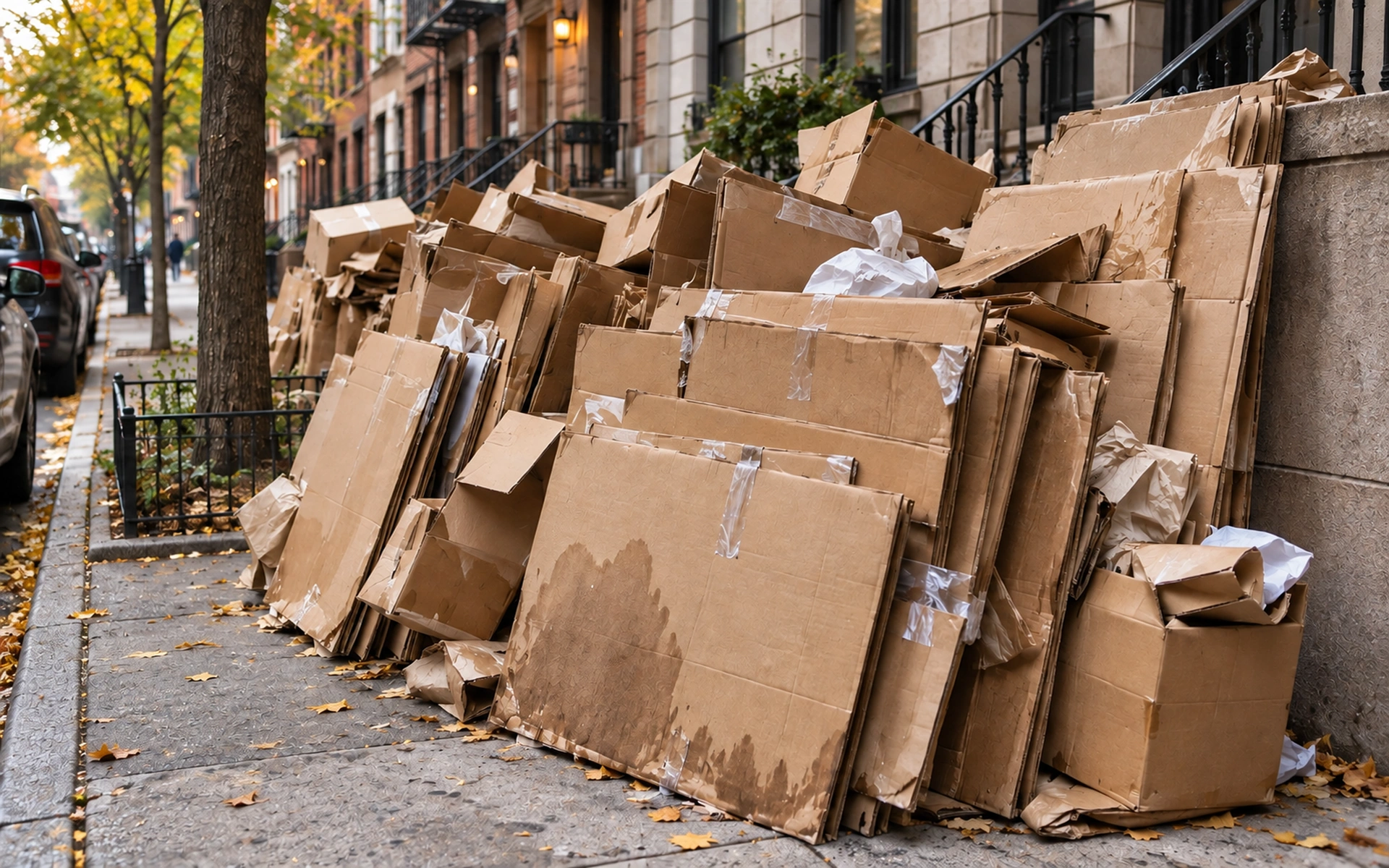
Walk past any New York curb the week after the first of the month and you will see it: a wall of flattened cardboard, taped and torn, waiting on a sanitation truck. That pile is a move. Somebody just carried their whole life up or down a set of stairs, and this is what got left behind. We treat it as normal, the same way we treat the box itself as normal. I want to argue that it is not normal at all.
Of everything that goes into a move, the truck, the miles, the hours of labor, the one part that exists only to be thrown away is the cardboard box. In my view it is the most wasteful thing about moving, and it is the part nobody thinks to question.
This is one thread of a larger argument I have been making, that cardboard is the last part of moving nobody stops to question: the boxless move. Here I want to pull on just one thread of it. Not the cost. Not the hassle. The waste.
The box is built to be thrown away
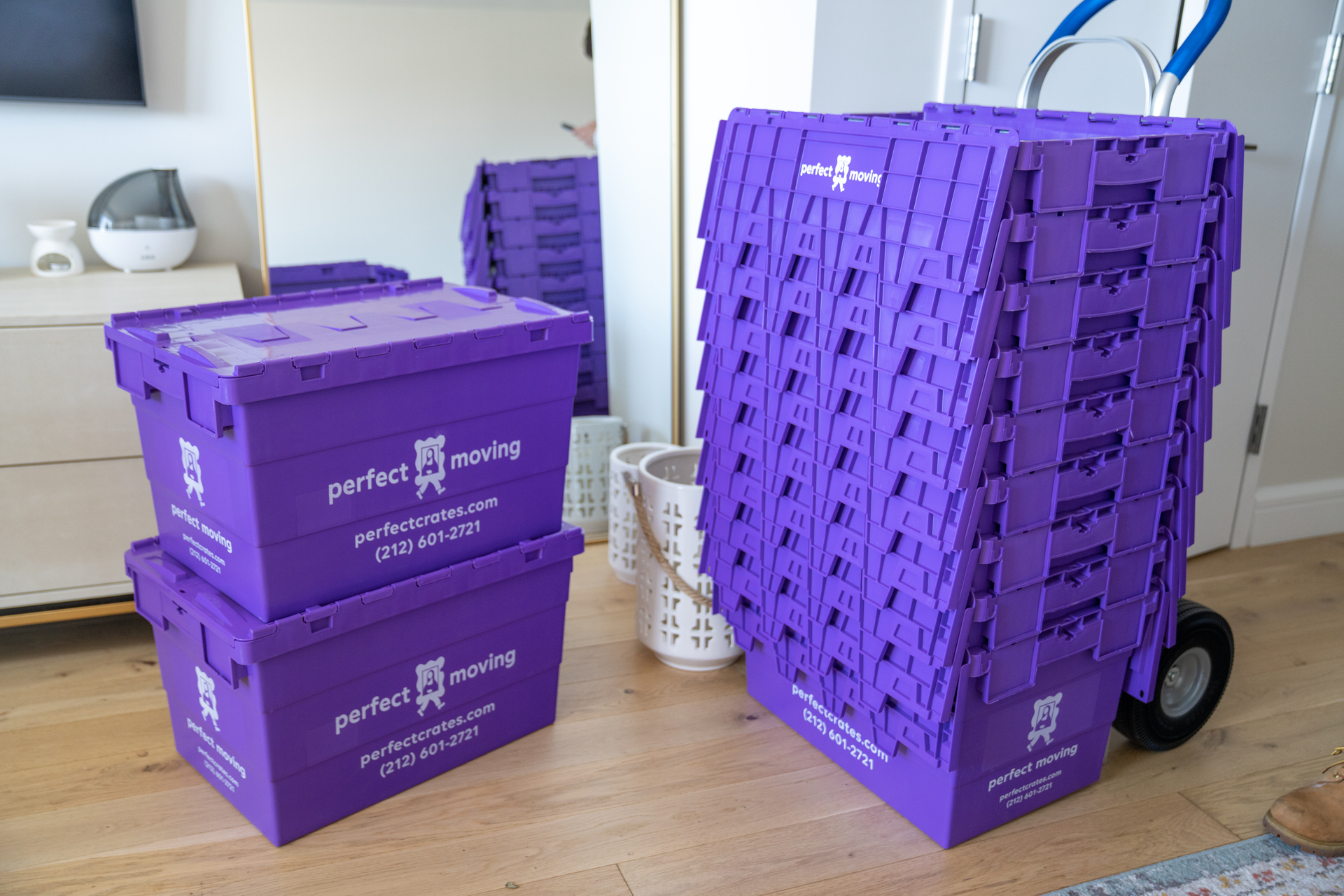
A cardboard moving box is single-use by design: it is built to be packed once, carried once, and then broken down for the curb. That is the quiet problem sitting inside every move. A reusable crate is made from recyclable plastic and is built to be used again and again. A cardboard box is made to make one trip. You buy it, you fill it, and within a week it is a flat brown rectangle on the sidewalk. Nothing about it was meant to last, so nothing about it does.
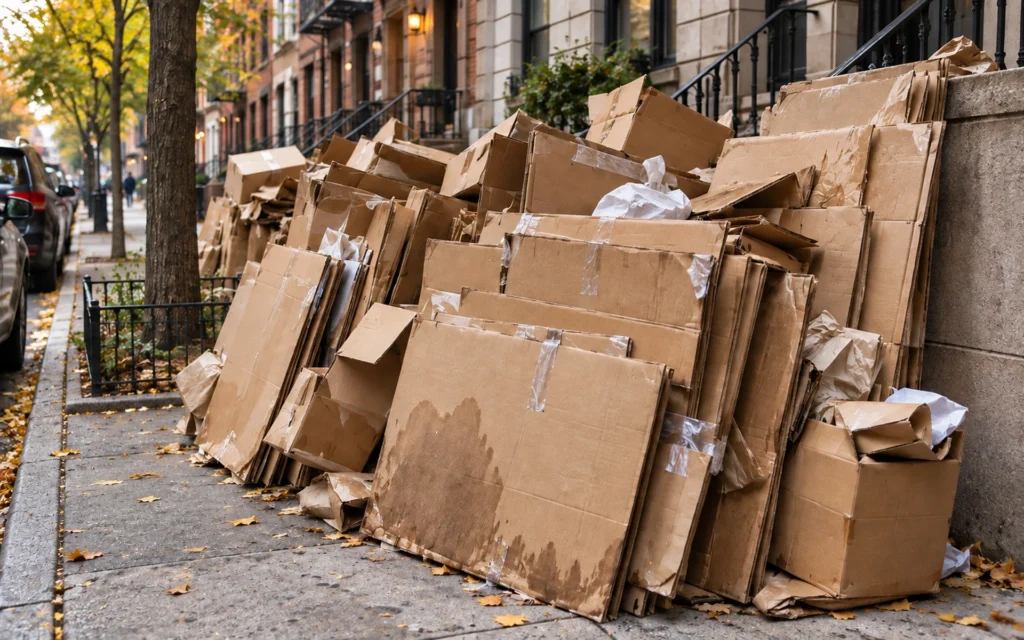
One move's worth of boxes does not look like much. A short stack of them, flattened at the curb. Easy to miss, and easy to forget the moment the truck pulls away. But your move is not the only move, and this is where the real size of the thing hides.
Zoom out to the whole country and the scale gets hard to picture. In 2018, containers and packaging were the single largest share of US municipal solid waste generated, by product category: about 82.2 million tons, roughly 28.1 percent of the total. And within that category, one product leads every other: the EPA's figures put corrugated boxes at 33.3 million tons generated in 2018, the single largest product category generated that year.
33.3 million tons of corrugated boxes generated in 2018, the largest product category in the US municipal waste stream. (U.S. EPA)
Your own boxes are a rounding error inside a number like that. That is exactly the point. Every one of those moves felt like a rounding error to the person making it, a few flattened boxes out at the curb. Stack a city's worth of them, month after month, year after year, and the box stops being a small thing you throw away and becomes a stream that never stops. The waste is invisible only because you only ever see your own share of it, and never the whole.
The greenest thing on the curb
The obvious objection is that cardboard is already the green choice, so I should be the last person calling it wasteful. The full version goes like this: cardboard is recyclable. It is biodegradable. It comes from a renewable material, and it is widely recycled. You flatten the box, you set it out, the truck takes it, and it comes back as more cardboard. On paper, that is a clean loop. So why call the greenest thing on the curb the most wasteful thing in the move?
Even if every word of that holds, a recyclable box is still a box made for one trip.
The EPA ranks reusing a container above recycling one, and that argument has its own piece: recycling isn't enough: reduce and reuse come first.
The other objection is that the box is tiny next to the truck and the miles. And it is. But the truck moves you no matter what you pack in. The engine runs, the fuel burns, the crew works, whether your things ride in cardboard or in crates. The box is the one part of the move that exists purely to be discarded, and it is the one part you can remove without changing anything else about the day.
That is why I keep my attention on it. Not because it is the biggest number, but because it is the most needless one.
The mountain at the curb
I did not arrive at this from a report. I arrived at it from the curb, on the back end of more moves than I can count. What changed how I see cardboard was not the start of the job but the end of it. You finish a move, the apartment is empty, the truck is loaded, and then there is the pile.
On a full apartment it is a mountain of boxes, broken down by hand and stacked at the curb, plus the tape, the packing paper, and the wardrobe boxes nobody ever keeps. The family is spent, and the last thing the move produces, before anyone gets to sit down, is trash.
I never think about a move until it's over and I'm staring at a pile of flattened boxes. This time there wasn't one. They picked the crates back up and that was it. The 'after' is the part nobody warns you about, and it's the part that disappeared.
Patrick V.
Flatten that mountain enough times and the box quietly changes on you. It is not packaging any more. It is garbage that has not happened yet. That is the part you cannot see from inside your own move: you see your stack; I have seen the mountain, on the same day, over and over.
Nobody sees the whole pile
A week after a move the flattened cardboard is still piled in the hallway and stacked at the curb, and it feels like one household's problem. That is how a waste stream hides: in pieces, each one too small to question, so nobody asks why the boxes get made at all.
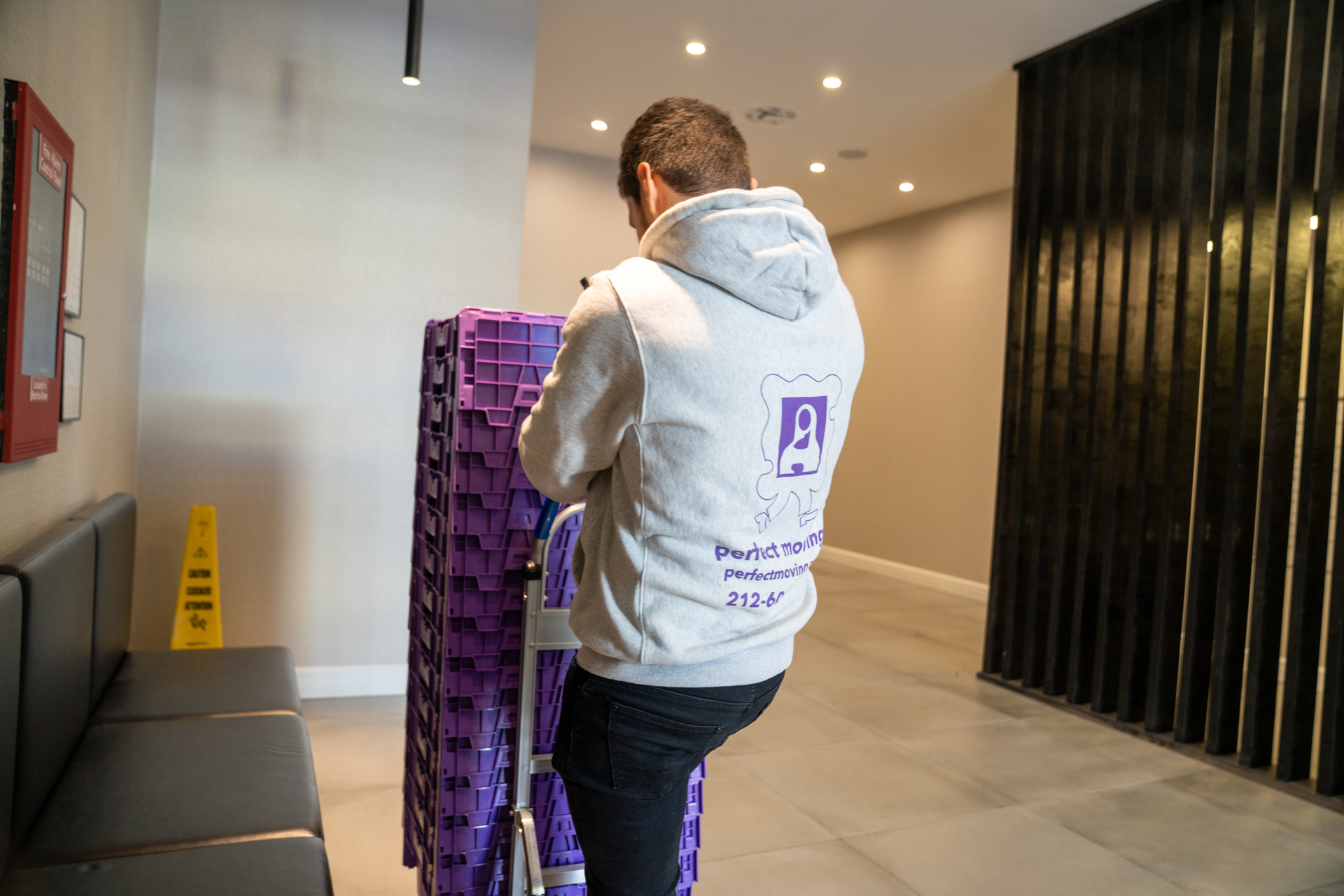
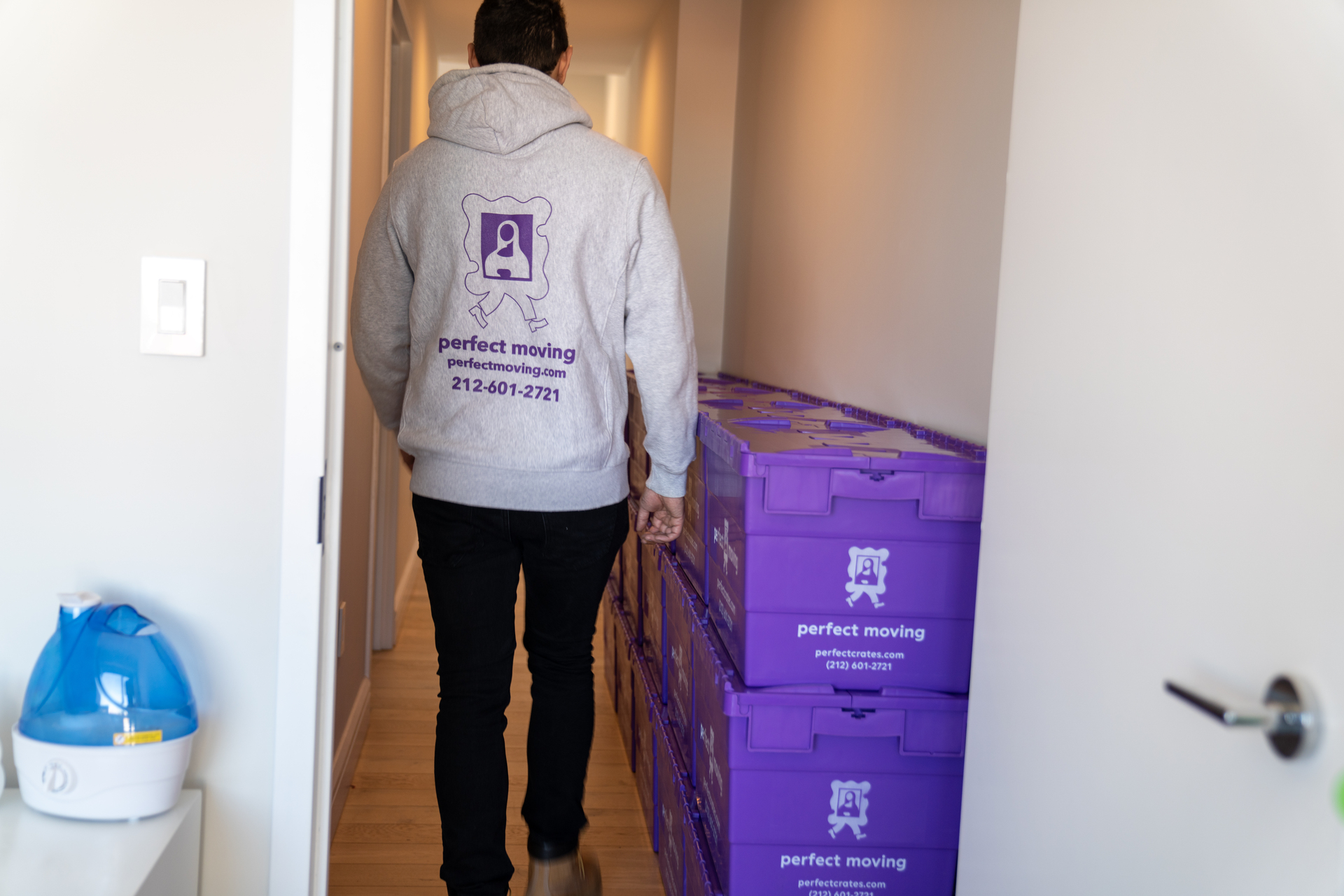
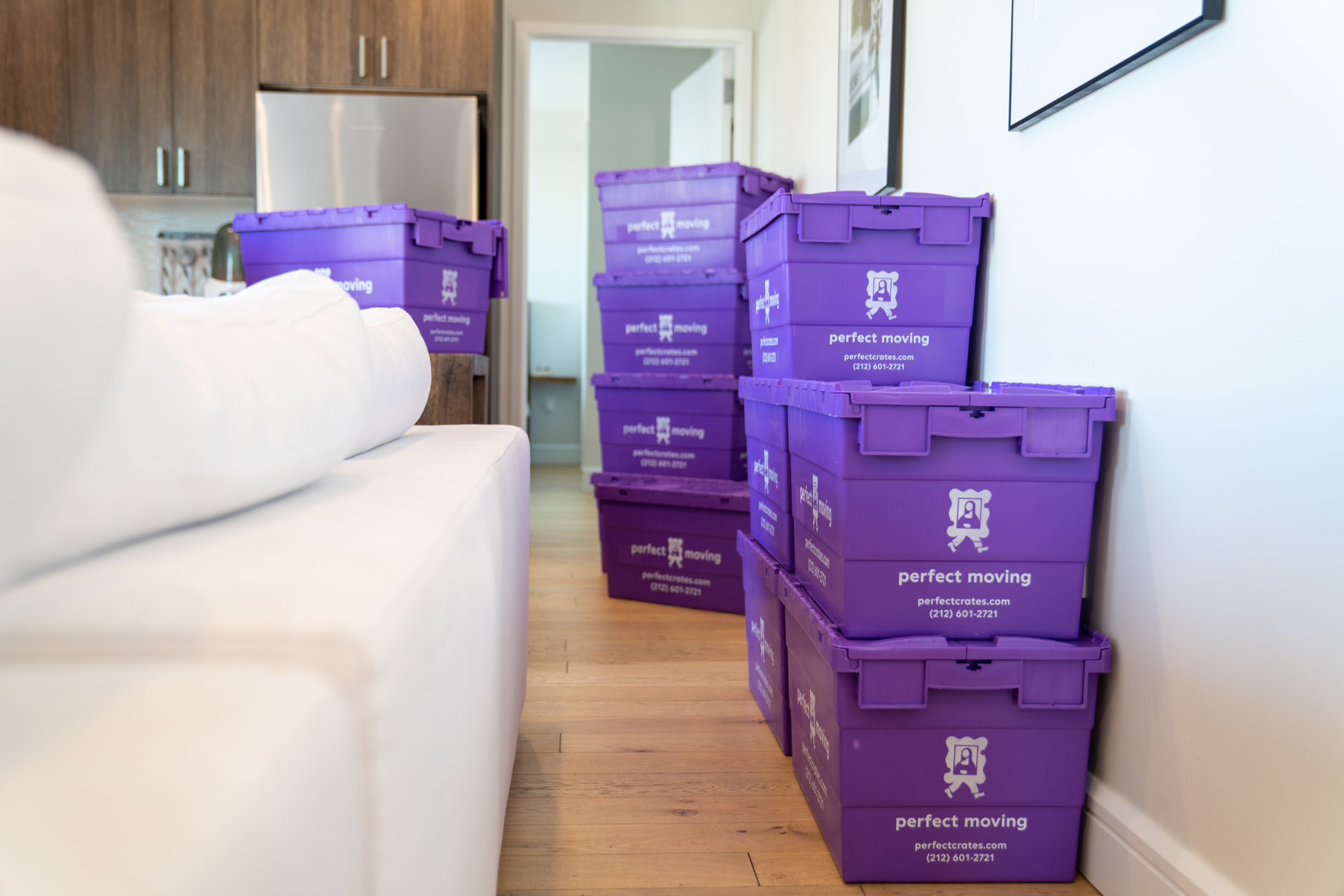
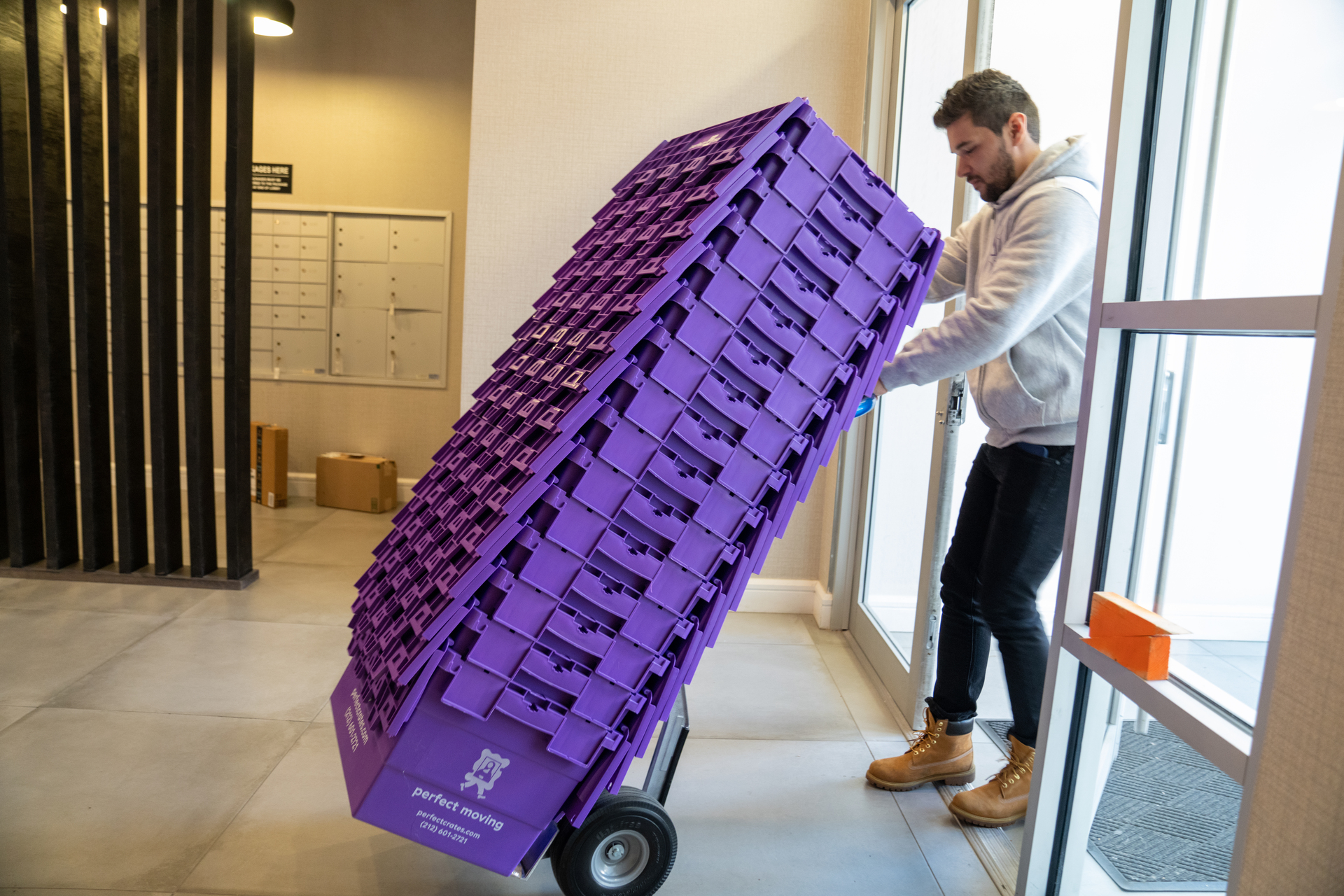
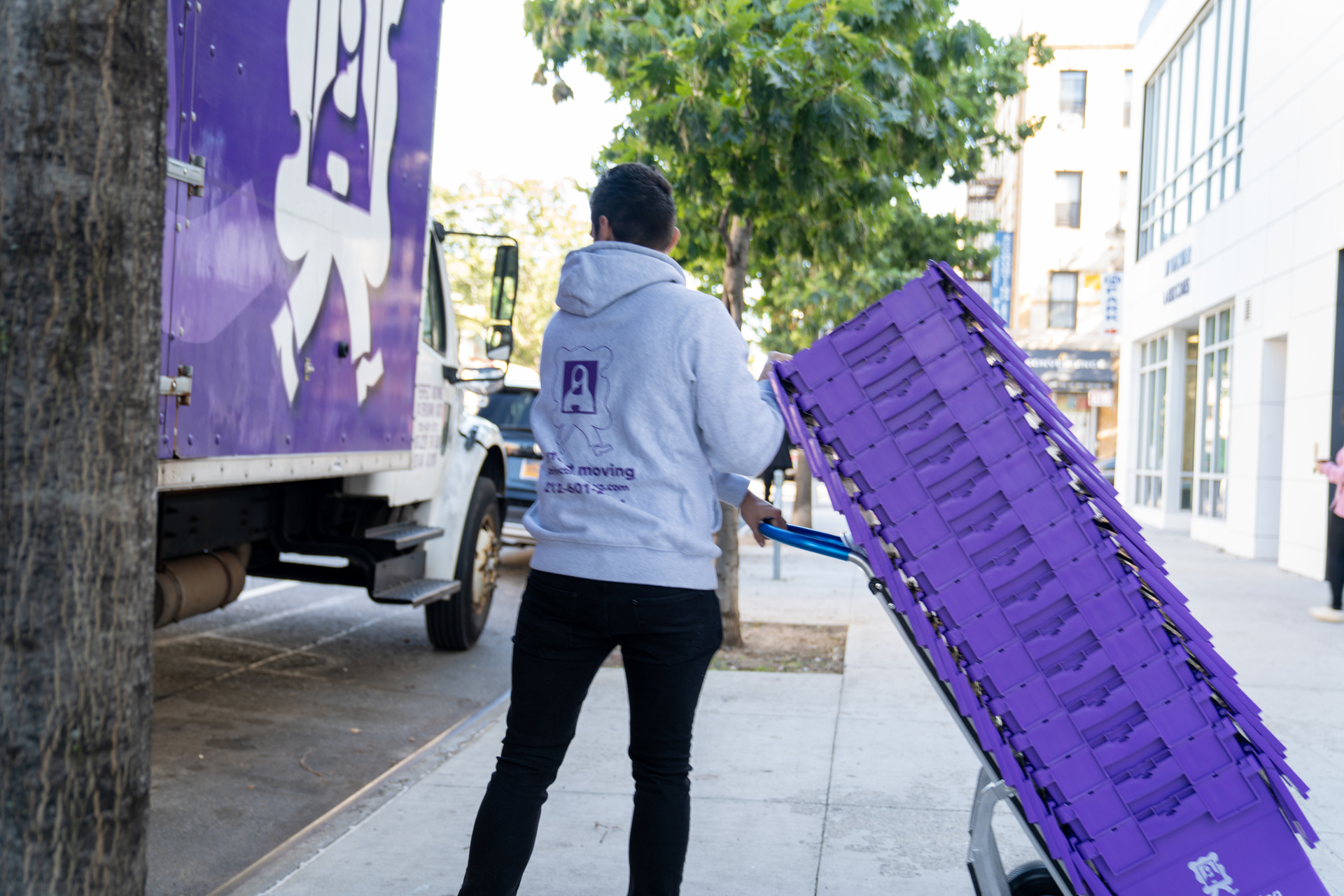
Crates break that pattern before it starts. They get delivered, you pack them, you move, and they get picked up after you are done. Nothing ends up flattened at the curb, because nothing was built to be thrown away in the first place.
Recycling manages the waste. It never asks why we made it.
The most wasteful part
So the case ends where it started, at the curb: the cardboard box is the most wasteful part of your move. Not because it is the biggest thing you throw away, but because it is the most pointless. It is single-use by design, in a city that moves constantly, feeding a waste stream so large that a single person cannot really picture it. Recycling manages that waste. It does not question it. The boxless move does.
Frequently asked questions
Isn't cardboard already recyclable, so how can it be the most wasteful?
Cardboard is recyclable, and that is a good thing. But a recyclable box is still a box made to be used once, and the EPA ranks reusing a container above recycling one. The full version of that argument is recycling isn't enough.
Is the box really a big deal next to the truck and the miles?
The box is small next to the truck, but the truck runs no matter what you pack in. The box is the one part of a move that exists purely to be discarded, and the one part you can remove without changing anything else about the day. It is not the biggest waste in a move; it is the most needless one.
How big is the cardboard waste stream?
Bigger than any one move makes it look. In 2018, corrugated boxes were the single largest product category generated in US municipal solid waste, at 33.3 million tons, per the U.S. EPA. The boxes from your own move feel like nothing, which is exactly why the total stays invisible until you picture a whole city's worth of them.
What does a boxless move do instead?
A boxless move uses reusable crates that are delivered, packed, moved, and picked up again for the next household. Nothing gets flattened at the curb, because nothing was built to be thrown away in the first place.
Leave nothing at the curb
If you want a move that does not end with a mountain of cardboard on the sidewalk, that is the whole idea behind Perfect Crates. See a move that leaves nothing behind.
- U.S. Environmental Protection Agency (2018 data): containers and packaging are the largest share of US municipal solid waste by product category (82.2 million tons, ~28.1%); corrugated boxes are the single largest product category generated (33.3 million tons).
- U.S. EPA: source reduction and reuse rank above recycling.
- The Boxless Move: the full case this piece is one thread of.
- Recycling isn't enough: reduce and reuse come first: why reuse beats recycling, and what the EPA hierarchy actually says.